
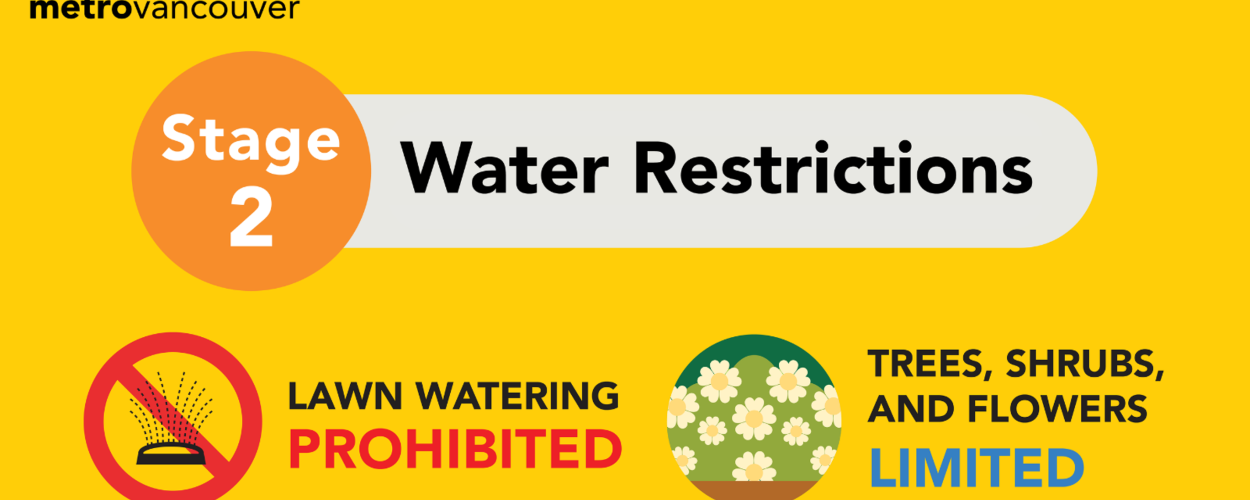
As of July 16, Stage 2 water restrictions are in effect for the Metro Vancouver region. All residential and non-residential lawn watering is still banned; restrictions on other outdoor water uses have been reduced.
Why is Metro Vancouver reverting to Stage 2?
Stage 3 restrictions were implemented to support the Stanley Park Water Supply Tunnel project and maintain water system pressure while construction was underway. The First Narrows Crossing, one of the key water supply pipes from the North Shore reservoirs, is now back in service following completion of a bypass.
With hot and dry weather in the long-range forecast, and no remaining snowpack, water conservation remains important to ensure treated drinking water is available for essential uses.
Stage 2 water restrictions for residents
Metro Vancouver's Drinking Water Conservation Plan has four stages. We are now in Stage 2 of this plan, which includes the following restrictions:
- All lawn watering is prohibited.
- Trees, shrubs, and flowers can be watered by hand or using soaker hoses or drip irrigation at any time, or by using a sprinkler between 5 and 9 a.m. any day.
- Vegetable gardens can be watered at any time.
- Aesthetic water features, such as fountains, cannot be filled or topped up.
- Washing impermeable surfaces like driveways and sidewalks is prohibited except in limited circumstances.
Stage 2 water restrictions for non-residential properties
Non-residential properties are subject to similar restrictions on lawn and garden watering, as well as filling and topping up aesthetic water features and washing impermeable surfaces. Watering at golf courses and sports fields is reduced and water play parks may not operate unless they have user-activated switches.
See the full water restrictions for Stages 1 to 4.
West Vancouver water facts
- All tap water is drinking water!
- Almost half of our drinking water comes from right here in West Vancouver.
- West Vancouver’s water is metered—when you use less, you pay less.
- Our water use doubles in the summer largely due to lawn watering, power-washing, and other outdoor use.
- Conserving water helps keep our environment healthy, reduces stress on our water system, and saves money.