This section focuses on the community’s natural assets, biodiversity, ecosystem services, and environmental risks. Building environmental resiliency supports long-term health, safety, and sustainability for current and future generations.
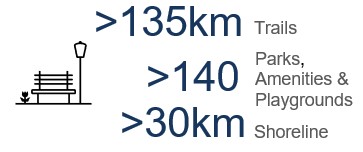
West Vancouver contains some of the most biodiverse areas in the region, offering clean air, fresh drinking water and extensive recreational opportunities. The District manages over 140 parks, including sports amenities and playgrounds, and 135 km of trails. Additionally, more than 30 km of shoreline provide public waterfront access points, beaches, and piers.
Image
Figure: Natural capital assets, 2019 West Vancouver
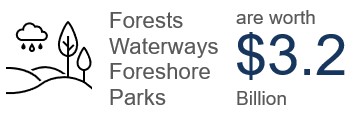
West Vancouver’s forests, waterways, foreshore, and parks provide an estimated $3.2 billion in ecosystem services to the community. These features contribute to stormwater management, air purification, cooling, and coastal protection. However, they are also vulnerable to climate change impacts, such as sea level rise and wildfire.
Image
Figure: Valuation of natural capital, 2019 West Vancouver
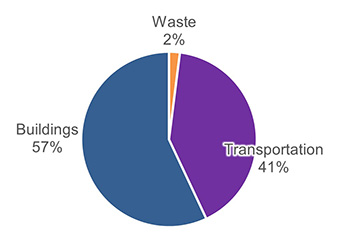
In 2021, 98% of the District’s community greenhouse gas (GHG) emissions came from buildings and transportation. Personal-use vehicles traveling under 4 km formed the largest share of transportation emissions. Without further mitigative actions, emissions are projected to increase by 17% in 2050. West Vancouver declared a Climate Emergency in 2019 and has set GHG reduction targets of 45% below 2010 levels by 2030 and net-zero by 2050.
Image
Figure: Community emissions inventory, Climate Action Strategy, 2024 West Vancouver